

The Bow Before the Sword
When people think of samurai weapons, the sword usually takes centre stage. Armour, helmets and masks follow close behind. Yet before the sword acquired its later aura, the Japanese warrior was above all an archer. For centuries the bow was the samurai’s principal weapon, and skill with it lay at the heart of warrior training and identity. The arrows they carried were tipped with forged iron heads known as yanone.
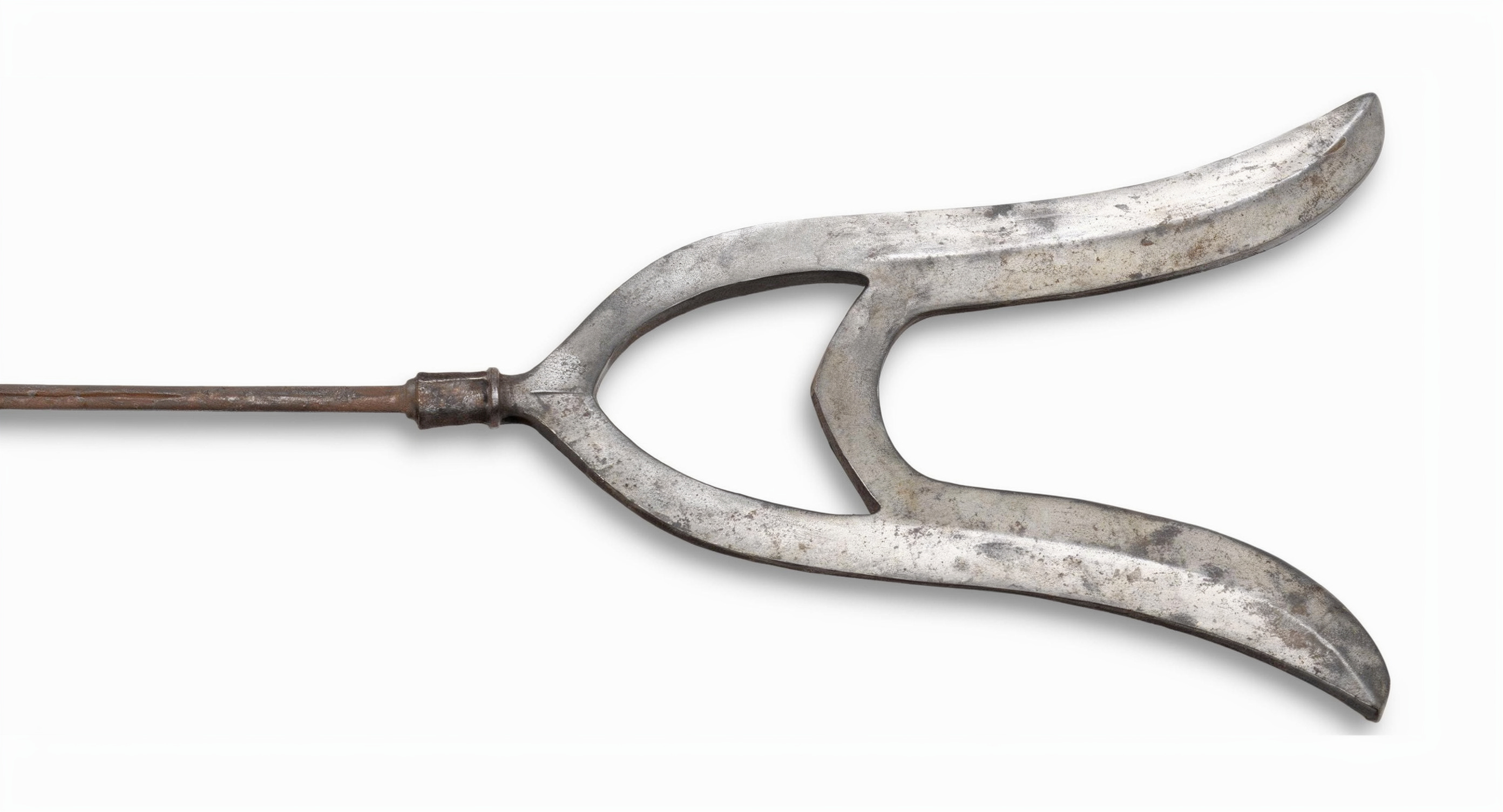
Today these arrowheads remain one of the less familiar areas of Japanese arms and armour. That is surprising, because they belong to the earliest and most important military equipment of the warrior class. Surviving examples show an impressive range of forms. Some are plain, robust heads made for the practical needs of war. Others are broader cutting types, intended to wound severely or sever ropes and equipment on the battlefield. By the Edo period, as large-scale warfare receded, arrowheads increasingly became objects of craftsmanship. Smiths produced finely pierced and decorative examples that turned a functional weapon into a small work of iron art.
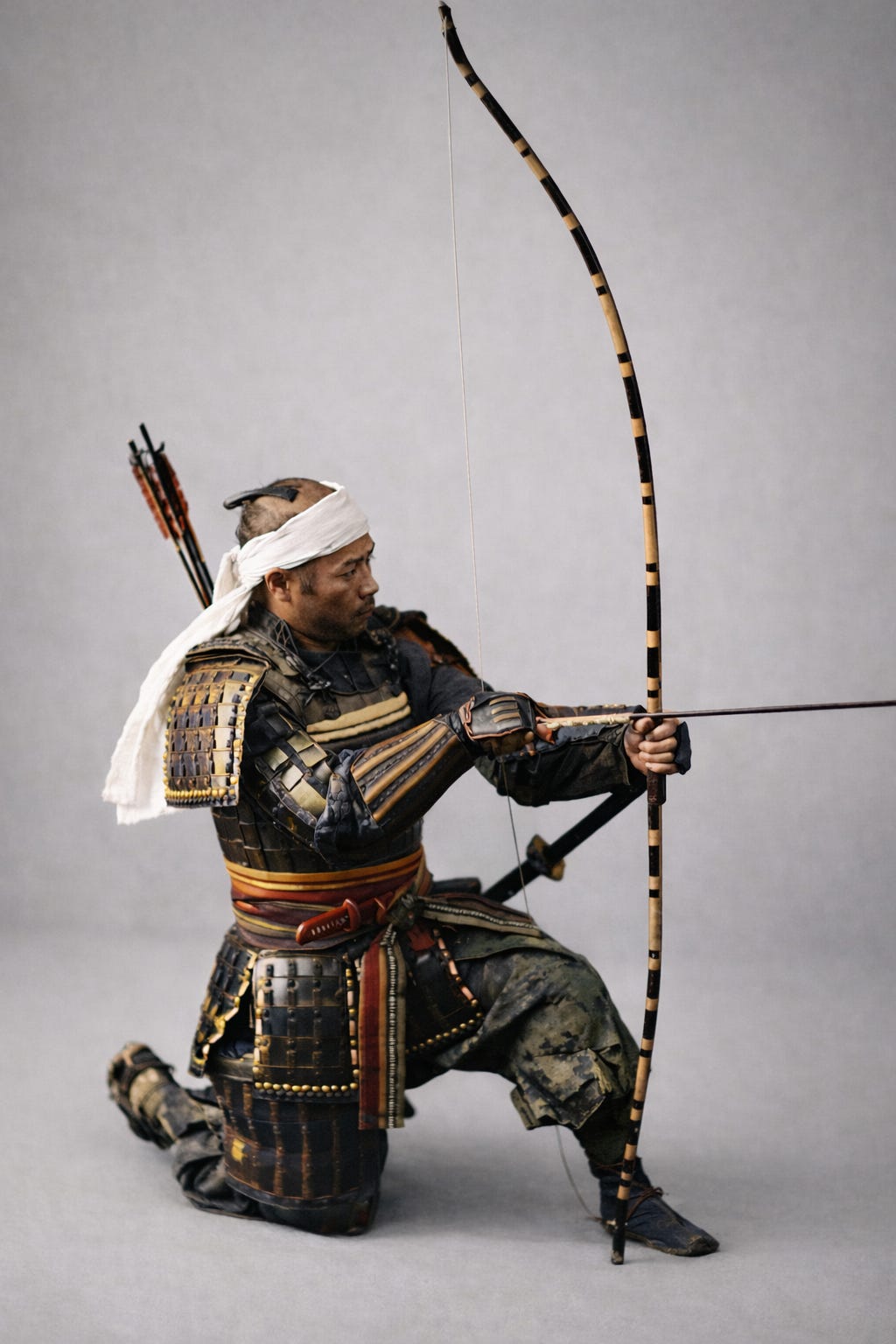
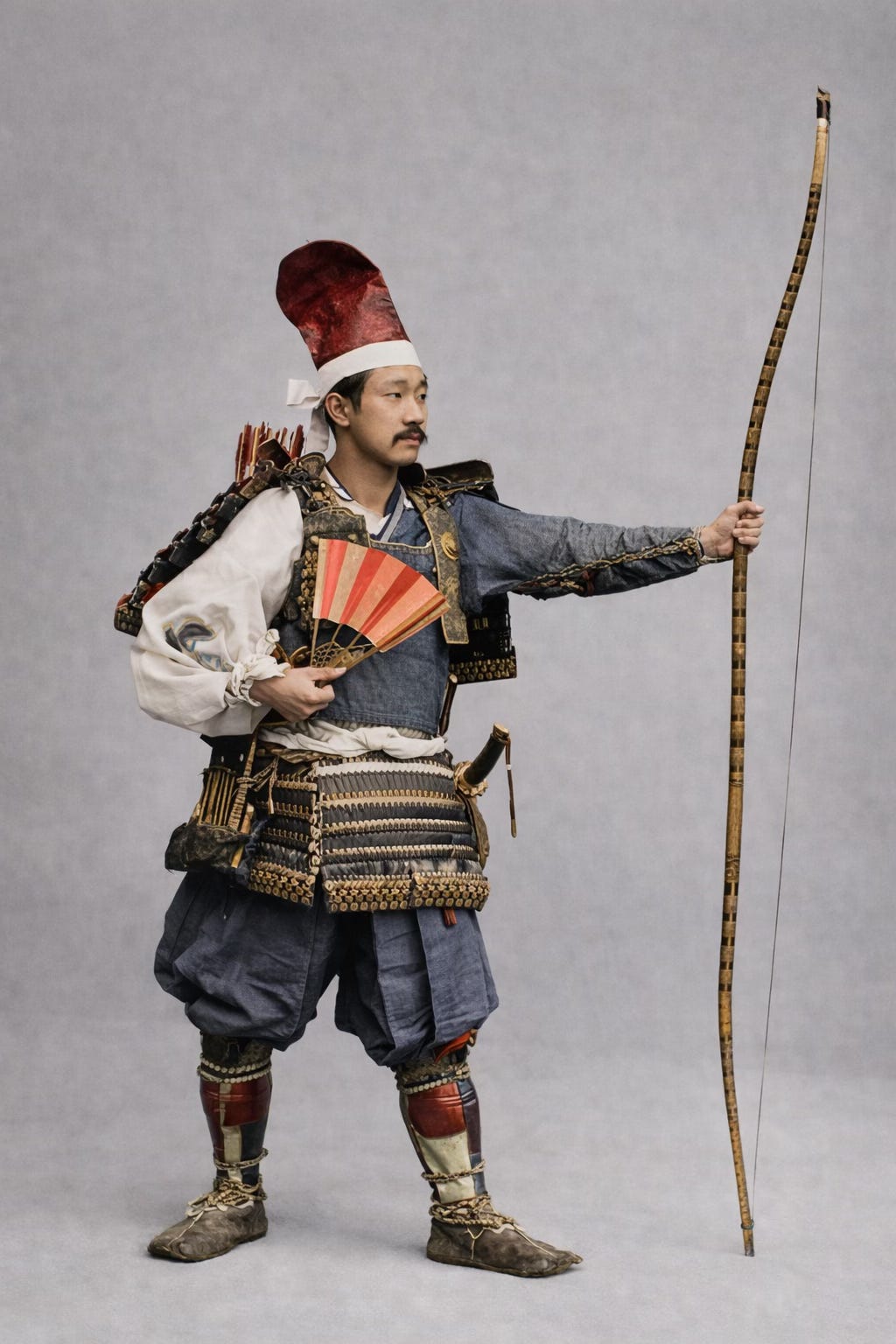
The history of the Japanese arrowhead is therefore a movement from battlefield utility to artistic refinement. In the early centuries of samurai warfare, the bow, or yumi, was central to combat, especially in mounted archery. Warriors carried a variety of arrows in a quiver known as an ebira, each fitted with a different head for a particular purpose. Some were made for penetration, others for cutting or for use against lighter targets. This variety gave rise to a specialised and highly considered body of forms, shaped by the practical demands of war and the skill of the smiths who made them.
Major Types of Japanese Arrowheads
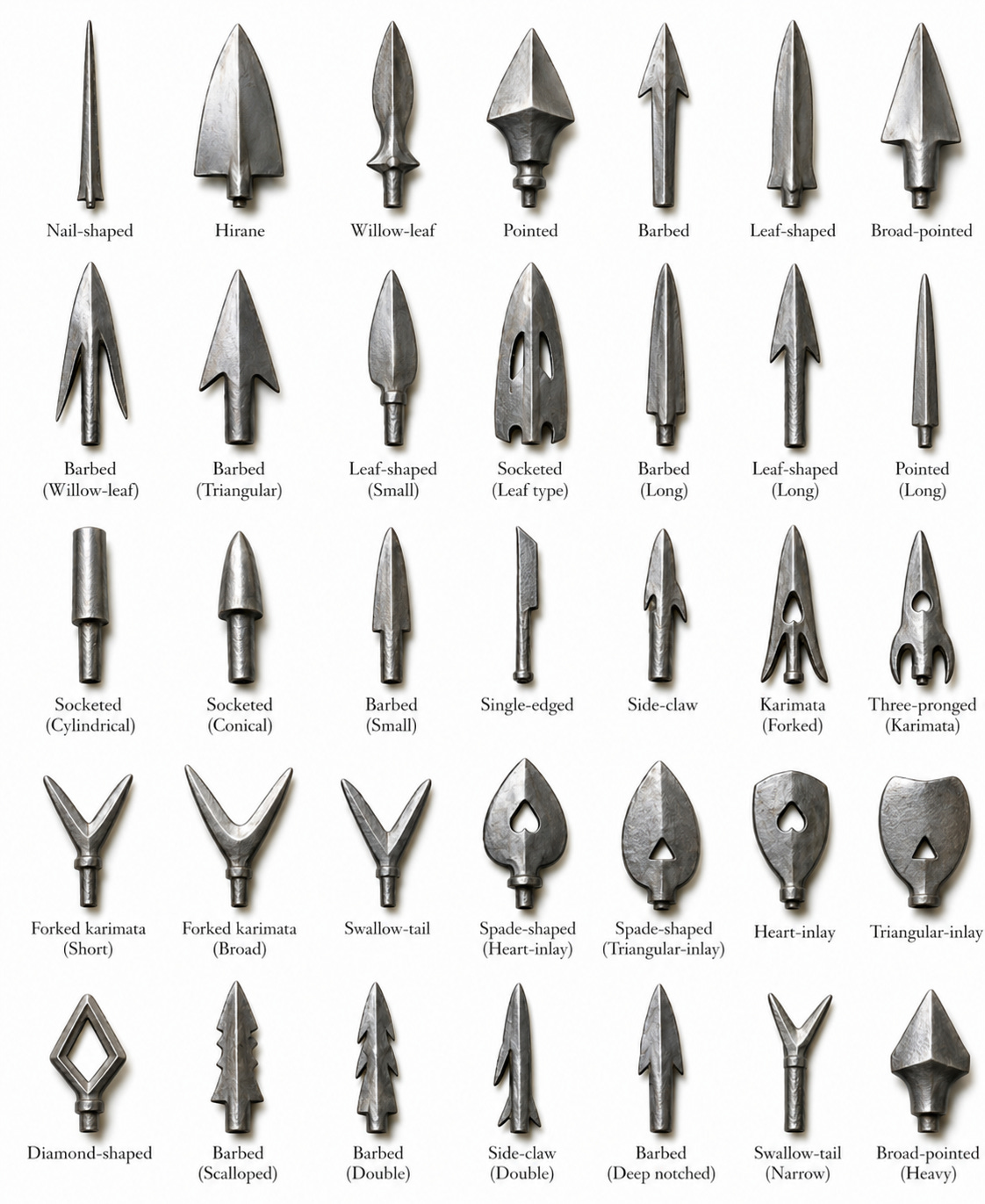
The variety of arrowheads produced in Japan is remarkable. A few of the most recognisable forms are outlined below.
Togari-ya 尖矢 / 尖り矢
Also known as 利雁矢 Reigen-ya
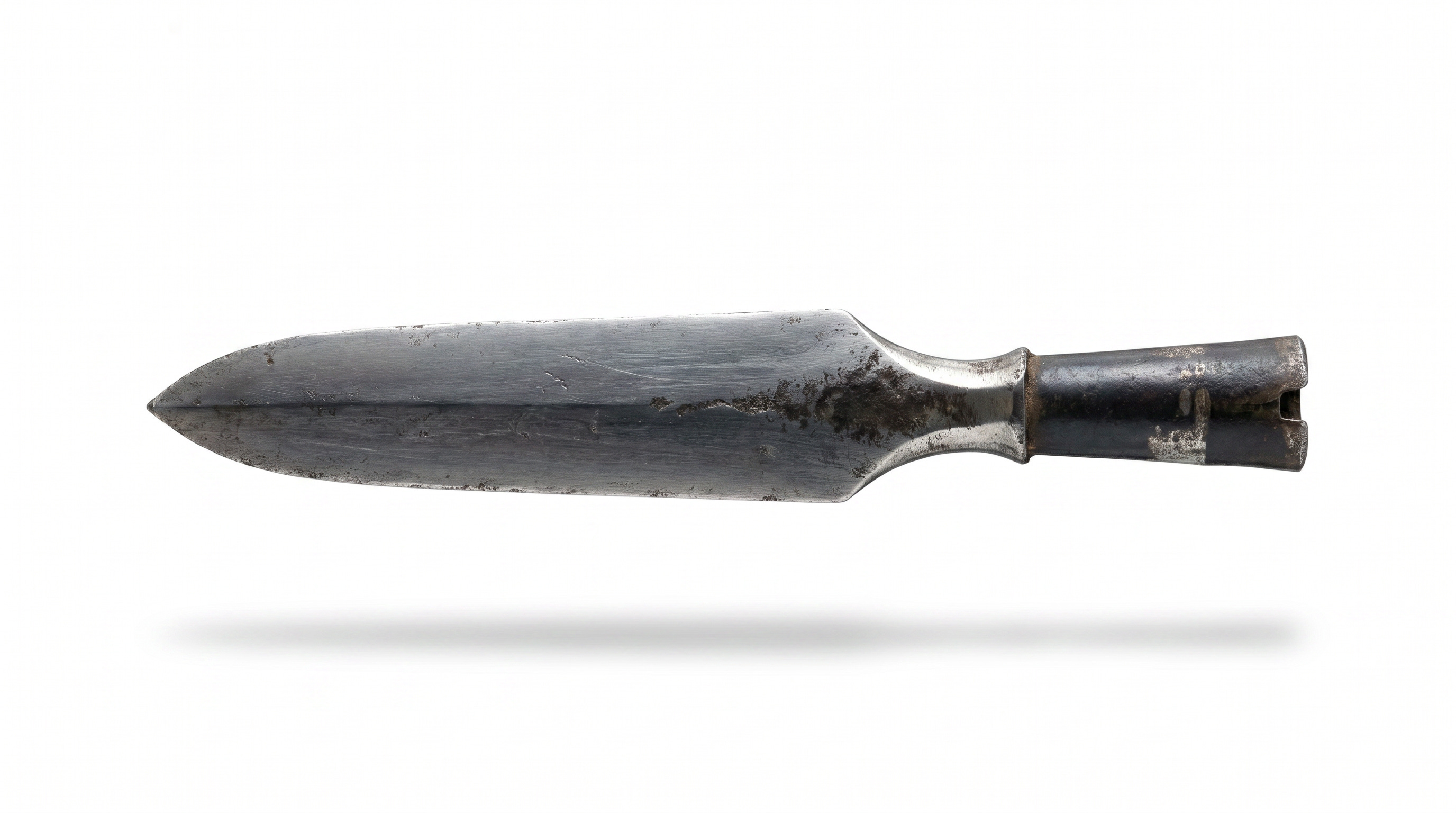
The togari-ya is one of the simplest and most functional forms of Japanese arrowhead. It is a pointed type, made for penetration rather than display, and Japanese sources also record the related name 利雁矢. The form may be triangular, lance-shaped, willow-leaf shaped, or simply narrow and sharply pointed, but its purpose remains the same.
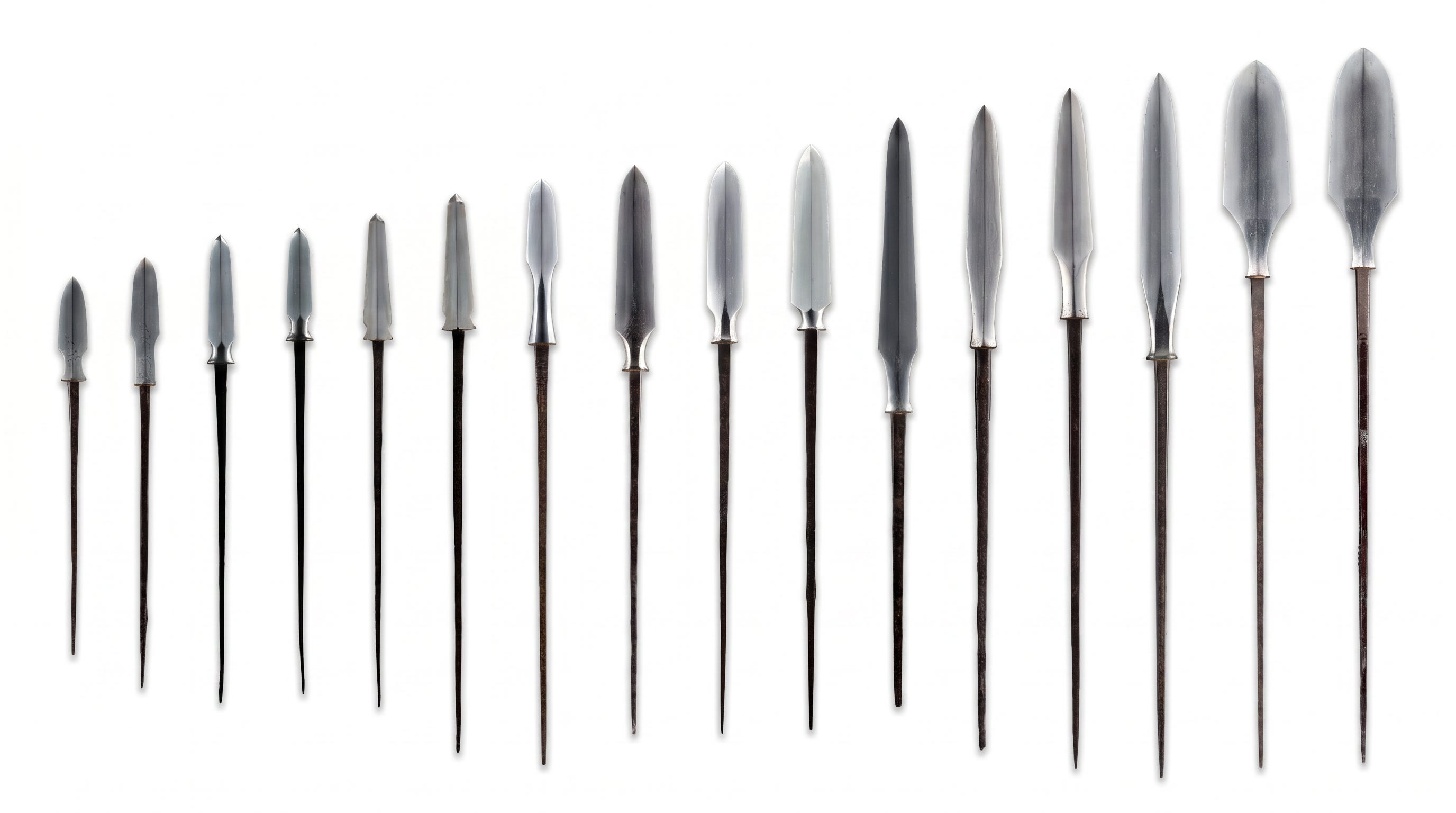
Unlike the broader hirane forms, which often have wide cutting blades and may be pierced or decorated, the togari-ya is direct and practical. Its strength lies in the pointed profile, which concentrates force at the tip and allows the arrowhead to drive into the target. For this reason, related pointed forms are often associated with practical war arrows, or soya.
In battle, this type was valued for reliability and penetration. It was suited to lightly protected areas, softer defences, and the gaps in armour where a broader head might be less effective. These were not arrowheads made to impress through openwork or decorative carving. Their value lay in strength, simplicity and function.
When identifying a togari-ya, look for a compact pointed head with a long tang. It should not be confused with broad spade-shaped, forked, crescent, or pierced ceremonial forms, which belong to other arrowhead families such as hirane or karimata.
Yanagi-ba 柳葉
Willow-leaf arrowhead
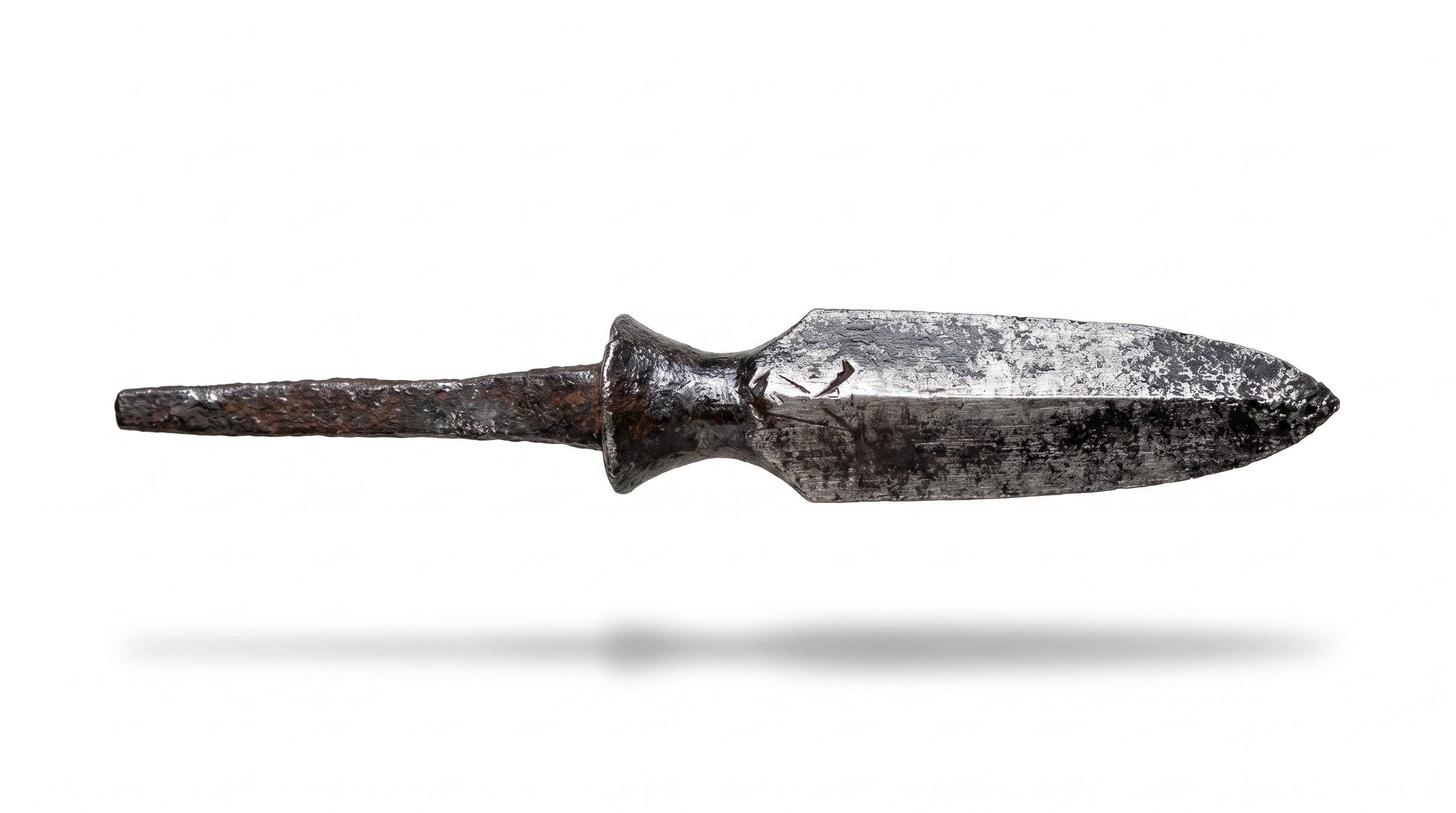
The yanagi-ba is a pointed form of Japanese arrowhead whose name means willow leaf. It belongs to the wider family of penetrating arrowheads, so it can appear close to simpler togari-ya forms, especially when seen in photographs. The distinction lies in the blade shape. A basic togari-ya is defined mainly by its point and its function, while the yanagi-ba is identified by its longer, more leaf-like outline.
The blade is usually narrow and tapering, with gently drawn edges that suggest the form of a willow leaf. This gives the arrowhead a more elegant profile than a simple triangular point, while still keeping the practical advantages of a streamlined penetrating head. It was not a broad decorative type like many hirane examples, nor a forked form such as karimata. Its design remained direct, controlled and functional.
In use, the yanagi-ba combined penetration with a longer cutting edge. The point allowed the arrowhead to enter cleanly, while the extended blade increased the wound as it passed into the target. This made it effective against lightly protected areas, exposed limbs, and the gaps or softer points around armour. Its slender form also helped preserve flight stability, avoiding the drag created by broader or more elaborate heads.
When identifying a yanagi-ba, it is best not to rely on the name alone. Look for a clearly elongated, leaf-shaped blade rather than a short triangular point. Where the form is too plain or compact, it may be safer to describe it more generally as a togari-ya, or as a pointed Japanese arrowhead in the togari family.
Karimata 雁股
Forked arrowhead
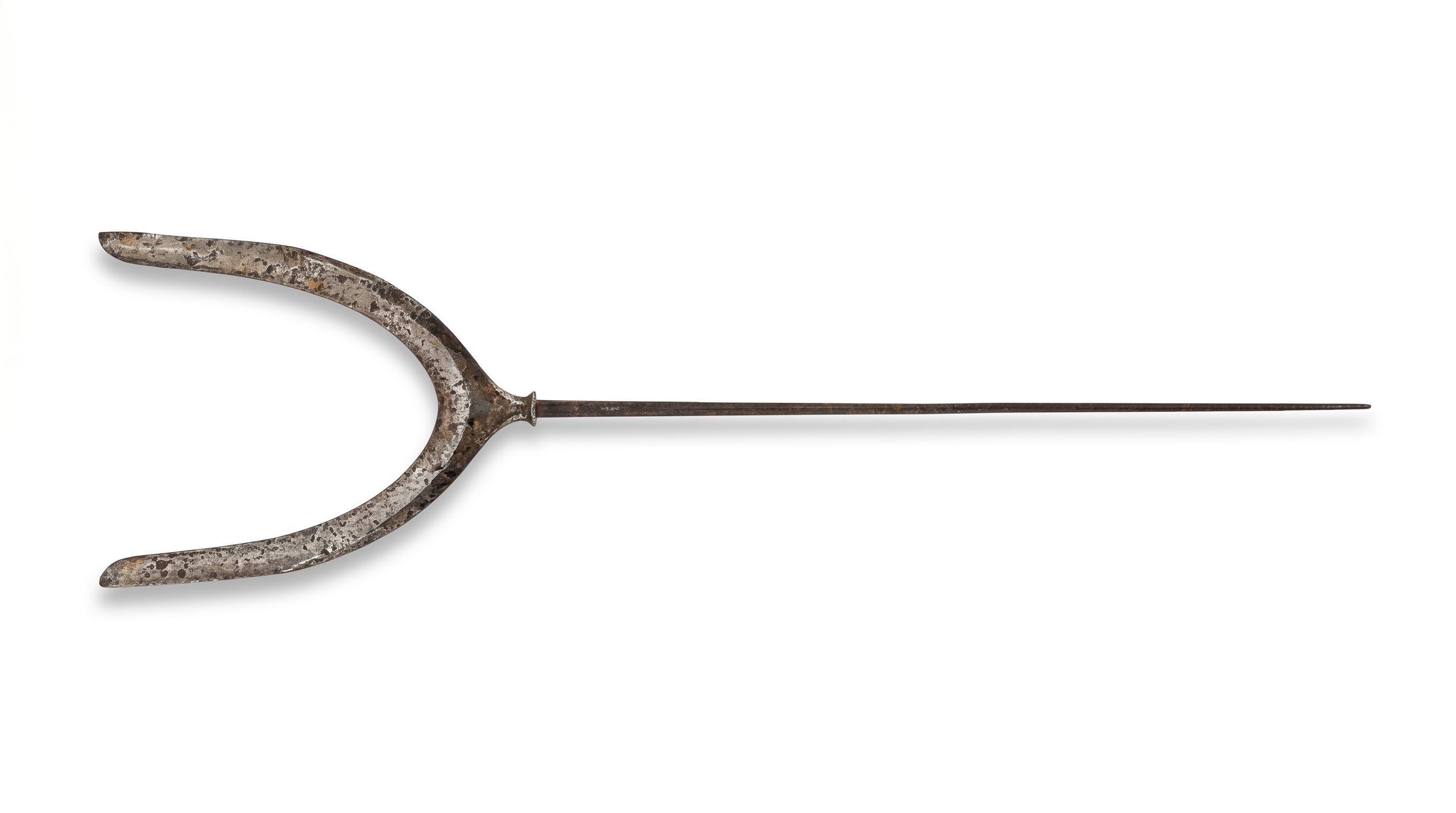
The karimata is among the most distinctive forms of Japanese arrowhead. Its head divides into two projecting blades, creating an open fork with cutting edges along the inside. This gives it a very different character from the pointed togari-ya or the narrow yanagi-ba. It was not designed simply to pierce, but to cut.
Japanese sources describe the karimata as a form used for cutting flying birds or fast-moving animals, placing it close in purpose to the broader hirane group. Its shape also explains the common association with cutting ropes, banners, reins or cords, although this should be understood as a practical interpretation of the form rather than the only recorded use.
Visually, the karimata is easy to recognise. Look for a forked, crescent-like head with two outward points and an open centre. The inner edges of the fork are the important feature, as these form the cutting surfaces. In some cases, the type was combined with a kabura, a hollow whistling fitting, to create the well-known kabura-ya, or whistling arrow.
Barbed Arrowheads
Barbed arrowheads were designed to cause severe wounds and make removal difficult once embedded.
The projecting barbs prevented the arrow from being easily withdrawn and could increase the damage inflicted during combat.
Pierced and Decorative Yanone
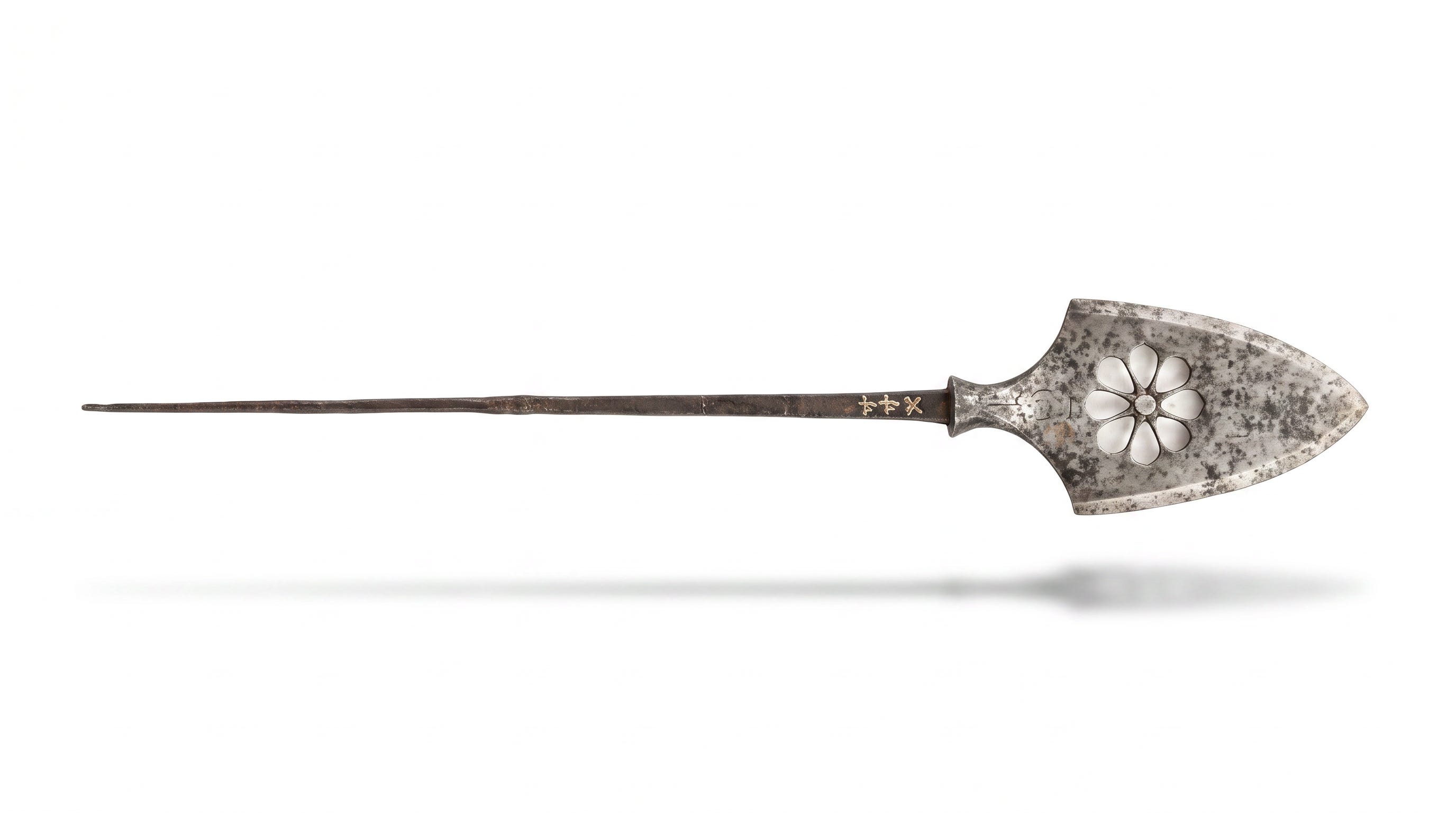
During the peaceful Edo period arrowheads began to evolve into objects of artistic expression. Some were pierced with intricate designs, geometric patterns or symbolic motifs and were likely produced as presentation objects or demonstrations of metalworking skill.
How Japanese Arrowheads Were Made
Despite their small size, Japanese arrowheads were carefully forged objects. The blade was formed from iron or steel and attached to a narrow tang known as the nakago, which was inserted into the hollow end of the arrow shaft.
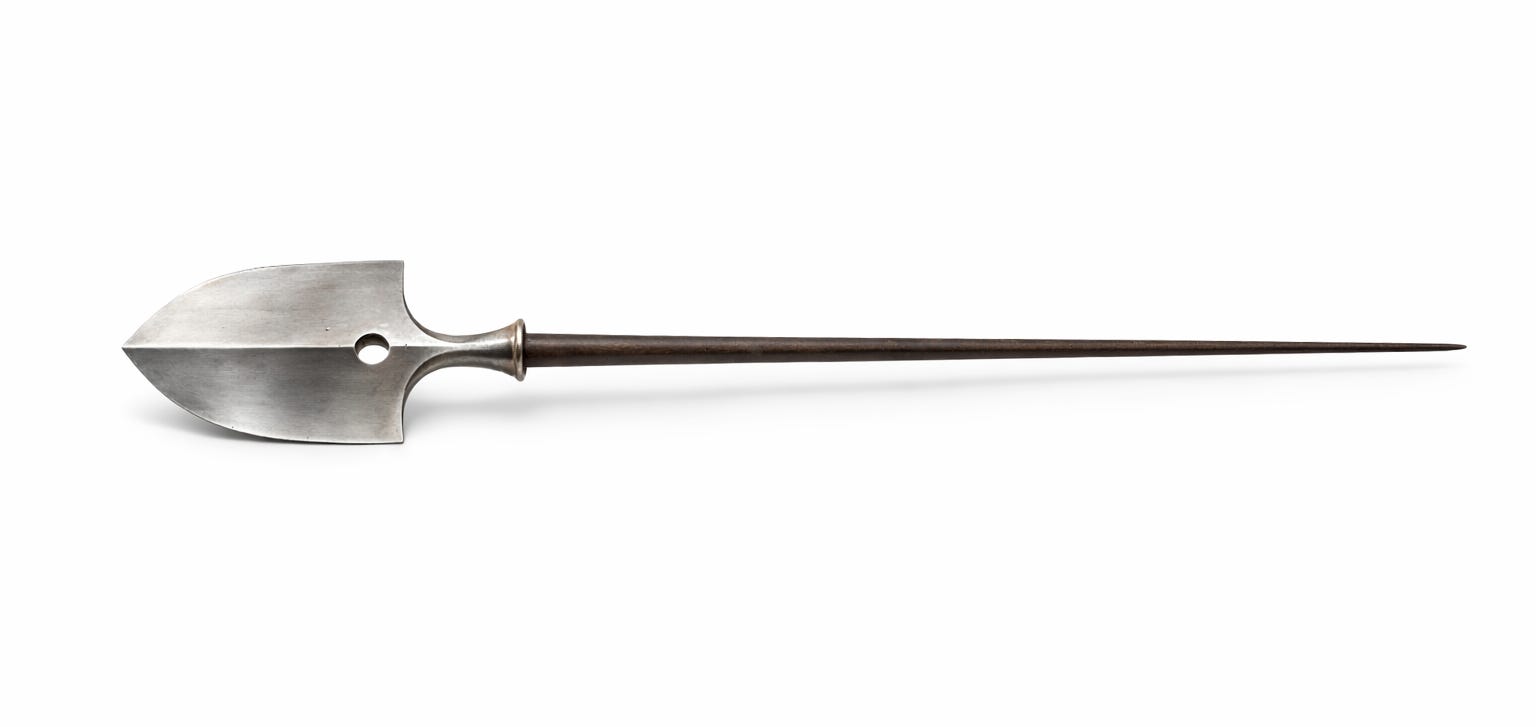
The metal was heated and hammered into shape before the cutting edges and surfaces were refined. Some examples were hardened along the edge to improve cutting performance, while others prioritised toughness and durability.
Later arrowheads often display more elaborate workmanship, including piercing, engraving and occasionally signatures.
Recognising Battlefield and Decorative Arrowheads
Arrowheads produced for practical use tend to share certain characteristics. They are usually compact, robust and relatively plain in design, reflecting their purpose as functional weapons.
Later decorative examples often show a different approach. Pierced designs, inscriptions and unusually large proportions suggest that the arrowhead was intended more as an object of display or craftsmanship than as a tool of war.
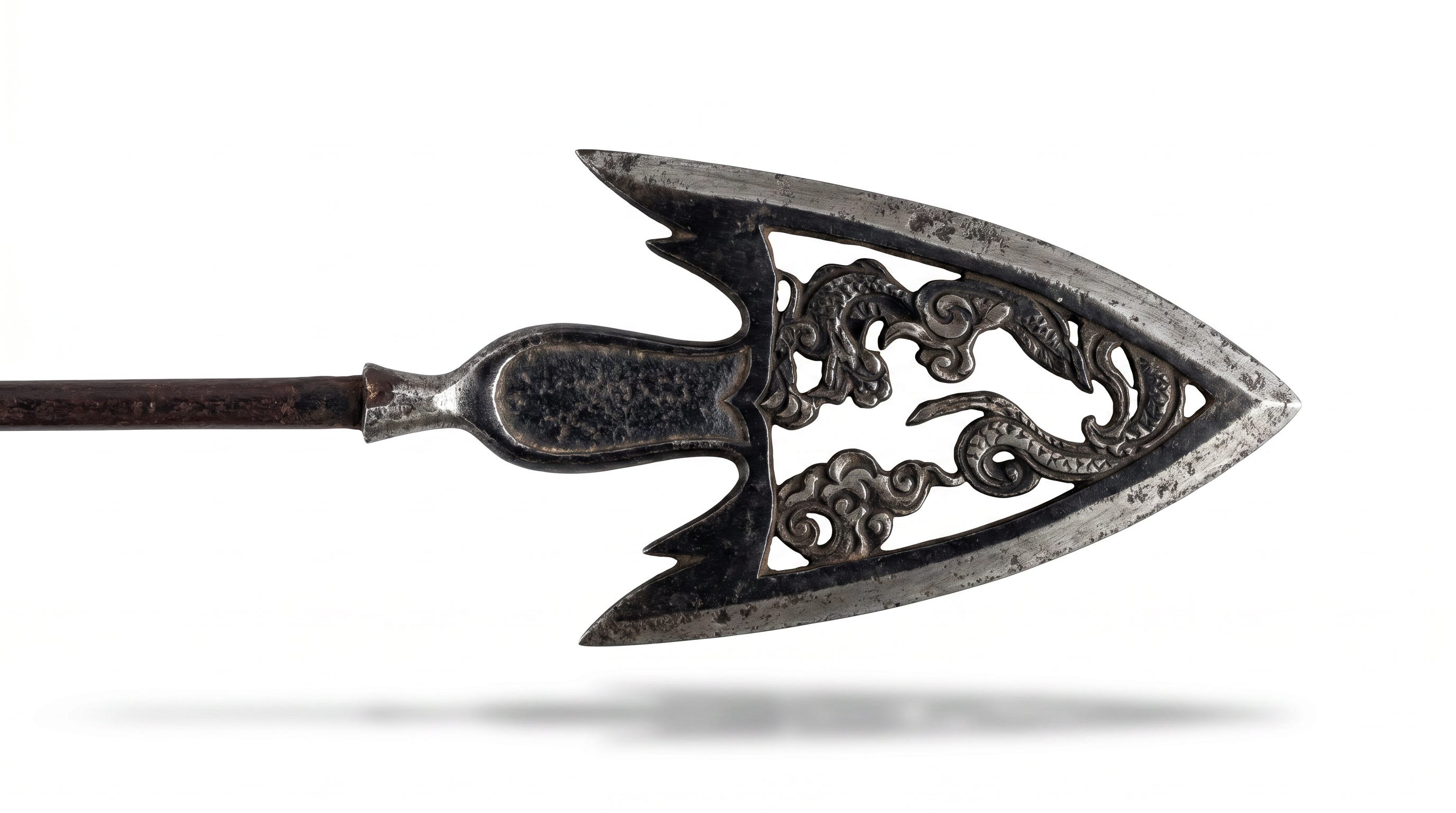
Museum collections contain several signed examples demonstrating this artistic tradition. A notable example is a pierced ceremonial arrowhead signed by Umetada Motoshige and dated 1645, showing how arrowheads could be appreciated as works of metal art during the Edo period.
Known Makers and Schools
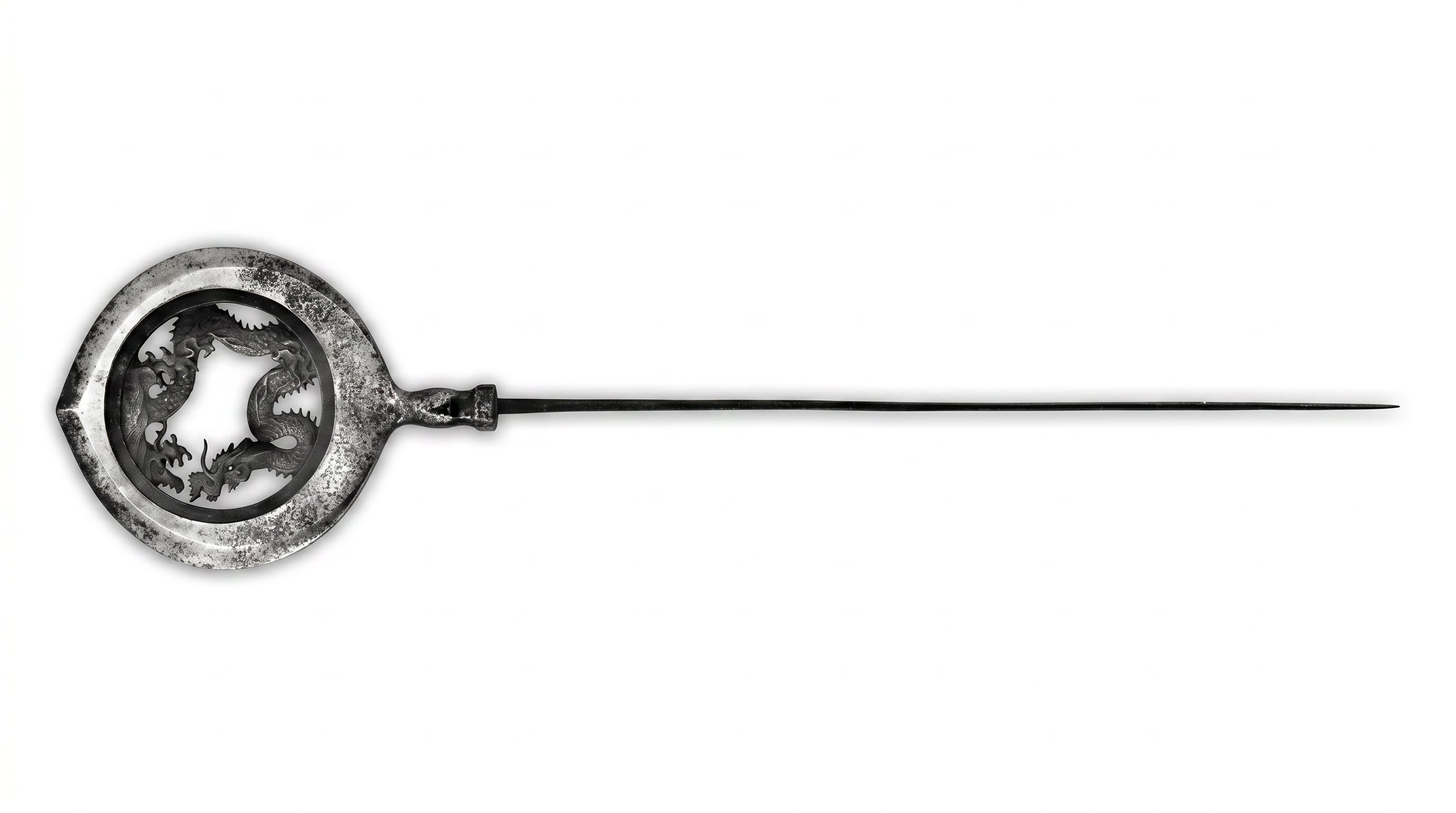
While many arrowheads were produced anonymously, some were signed by recognised craftsmen. These include metalworkers associated with decorative ironwork traditions as well as smiths connected to armour making.
In earlier periods arrowheads were often produced within armourer workshops supplying military equipment. Later examples reveal the involvement of more specialised craftsmen, including members of schools better known for sword fittings and ornamental metalwork.
The existence of signed pieces demonstrates that the arrowhead had become an object valued not only for its martial function but also for the craftsmanship involved in its creation.
An Overlooked Field of Collecting
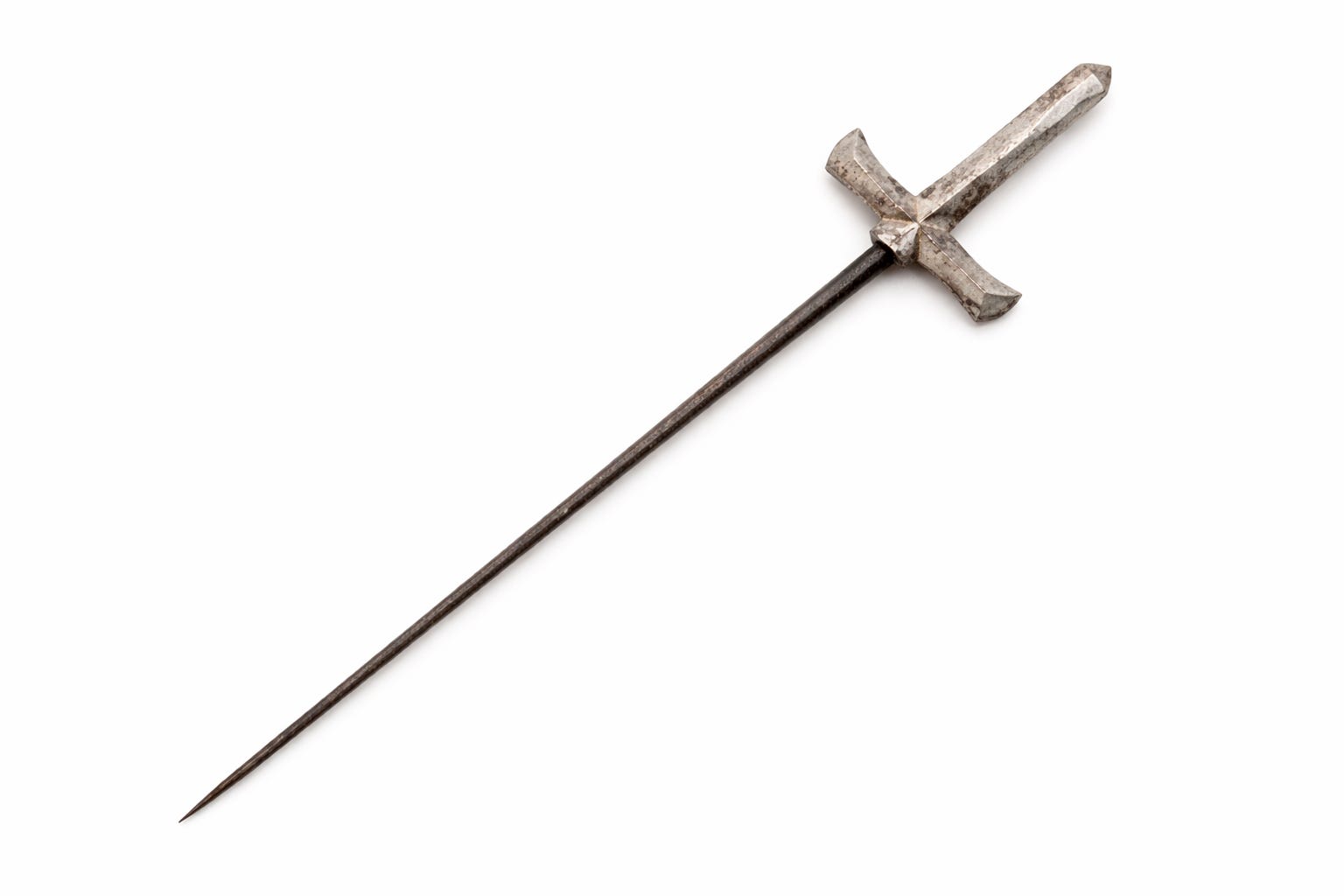
Today Japanese arrowheads remain a relatively overlooked area within the broader field of samurai arms and armour.
Yet they offer an extraordinary range of forms, from simple battlefield weapons to intricate examples of iron artistry. Their modest size allows them to be studied closely, and even modest examples often display impressive forging and workmanship.
For collectors interested in the material culture of the samurai, the arrowhead provides a fascinating and often under appreciated window into the world of Japanese warfare and craftsmanship.
Small though they may be, these objects once formed the cutting edge of the samurai’s earliest weapon.
How Arrows Were Carried and Used in Battle
Samurai archers typically carried their arrows in the ebira, a distinctive quiver worn on the back. Unlike many later quivers which concealed the arrowheads, the ebira held the arrows vertically with their heads exposed.
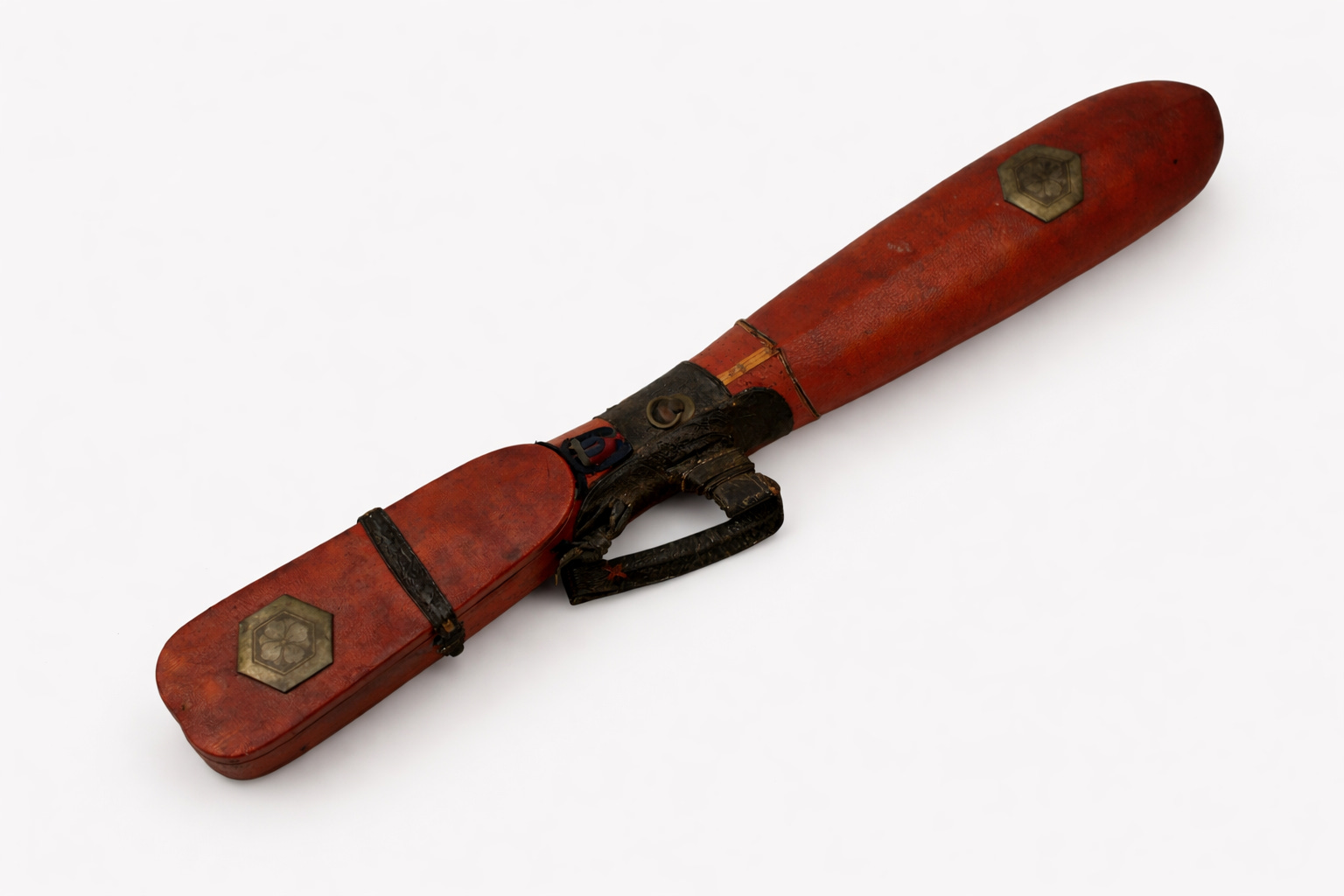
This allowed the warrior to select an arrow quickly while mounted or on foot. The visible arrowheads made it easy to choose the appropriate form for the situation.
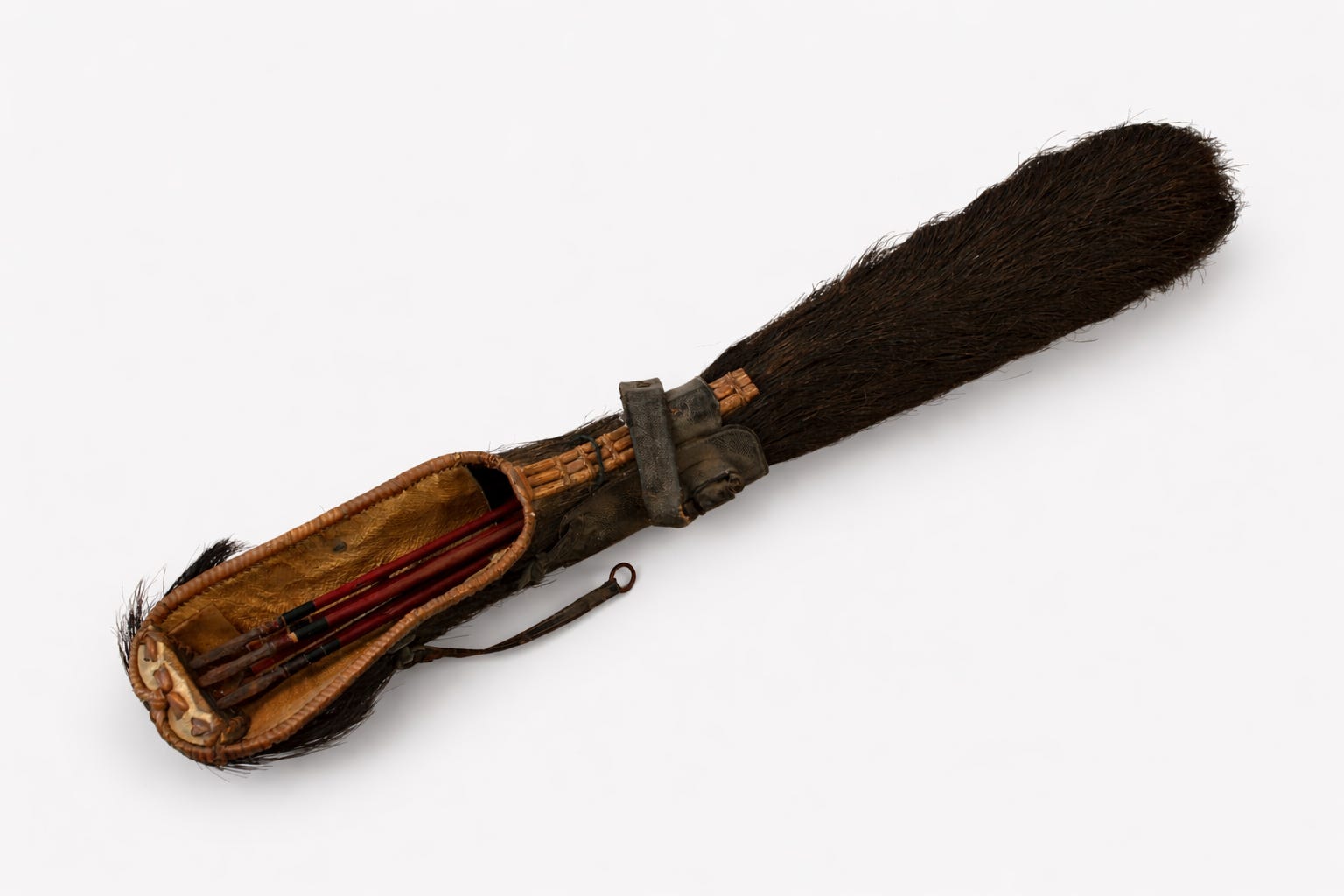
Arrows also played ceremonial and symbolic roles. Certain specialised arrows, such as whistling arrows, produced a loud sound in flight and were sometimes fired at the beginning of a battle as a signal or challenge.
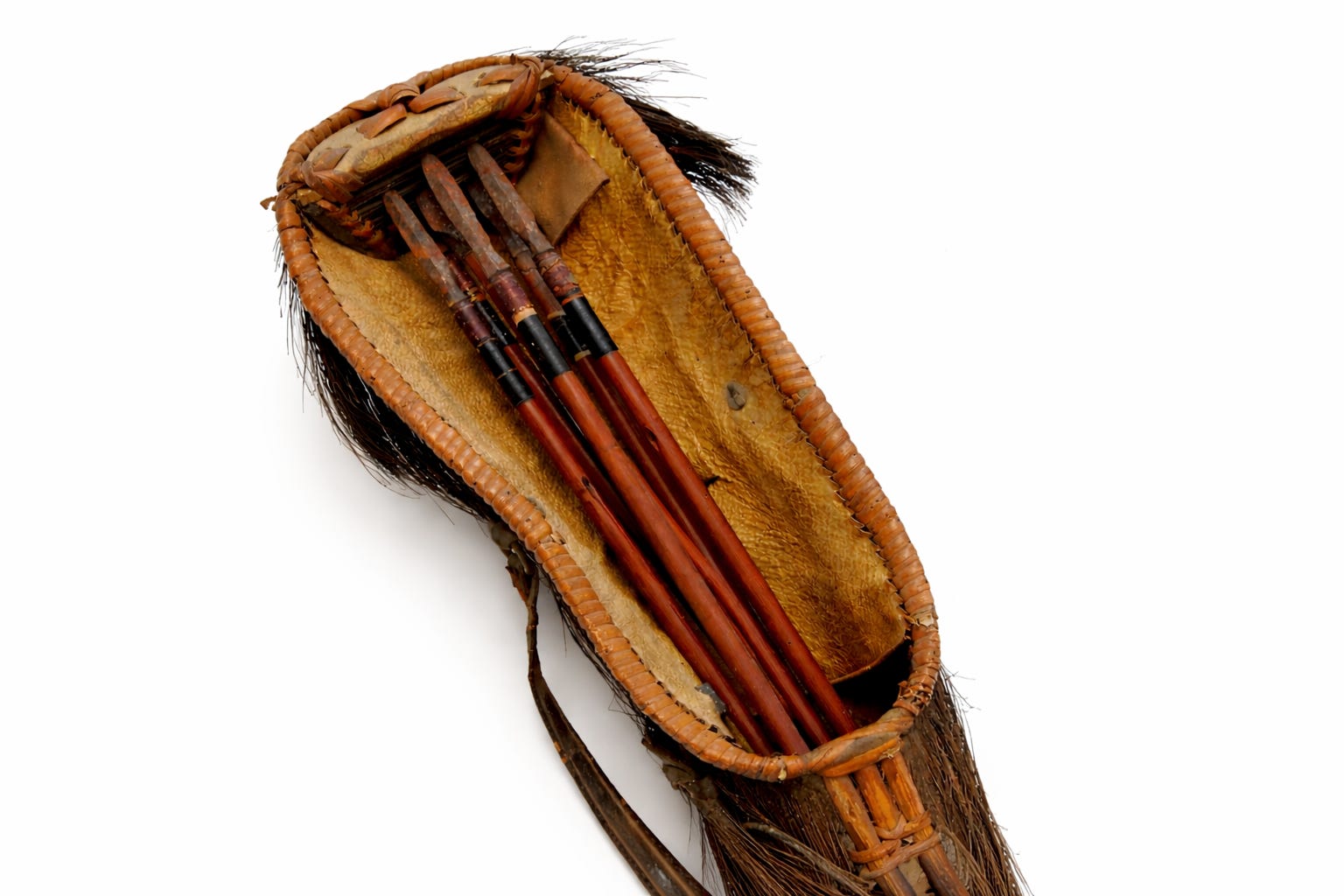
In this way arrows formed part of a broader martial system combining practical battlefield use with elements of ritual and tradition.
Best Movie Scene
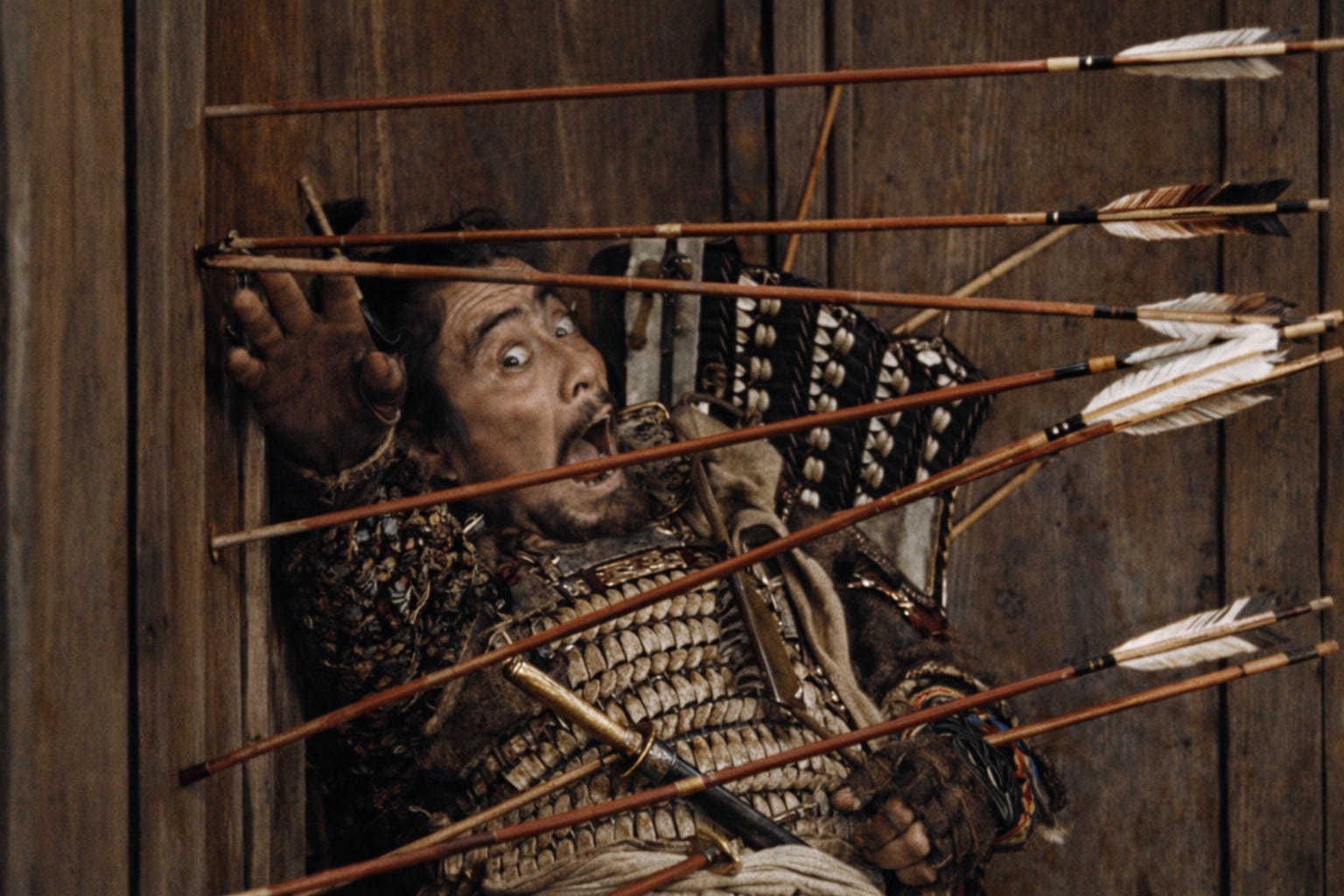
I had to include this. In Throne of Blood (蜘蛛巣城 (Kumonosu-jō) – Cobweb Castle, 1957), the famous death scene of the warlord Washizu, played by Toshiro Mifune, is one of the most remarkable practical effects sequences in cinema. As Washizu realises his men have turned against him, he is driven back against the wooden wall of the castle corridor while arrows begin striking around him.
For the sequence, Akira Kurosawa chose to create genuine danger and realism. Members of a local kyūdō club were brought in to fire real arrows down the corridor during filming. These arrows were aimed at precise marks around Mifune’s body so that they would embed in the walls close to him. The arrows that appear to strike his body were attached to wires or pre-fixed to his armour, but the majority of the arrows flying past him and slamming into the set were actually being shot by real archers.
The result is the extraordinary tension visible in the scene. Mifune’s reactions are not purely theatrical. He was performing while real arrows were striking the wall only inches from him, giving the moment a raw intensity that remains one of the most memorable sequences in samurai cinema.
Just in closing I haven’t listed every type of arrowhead known to man, there’s also versions that are made from wood and bone which whistle when fired.
Interesting read Dave , what I’ve tried to discover ( as I did archery a few years back ) what poundage was the norm for these bows. .. I know it is estimated that bows found on the Mary Rose where probably around 160 - 180 .. I struggled with 75lb bow … I do wonder - considering the stature of the Japanese some been on horse back - what poundage these bows where? If low .. obviously to cause damage they would have had to been close to the enemy .
Excellent piece Dave